
changing with the seasons
shifts towards Harvest and Hibernation

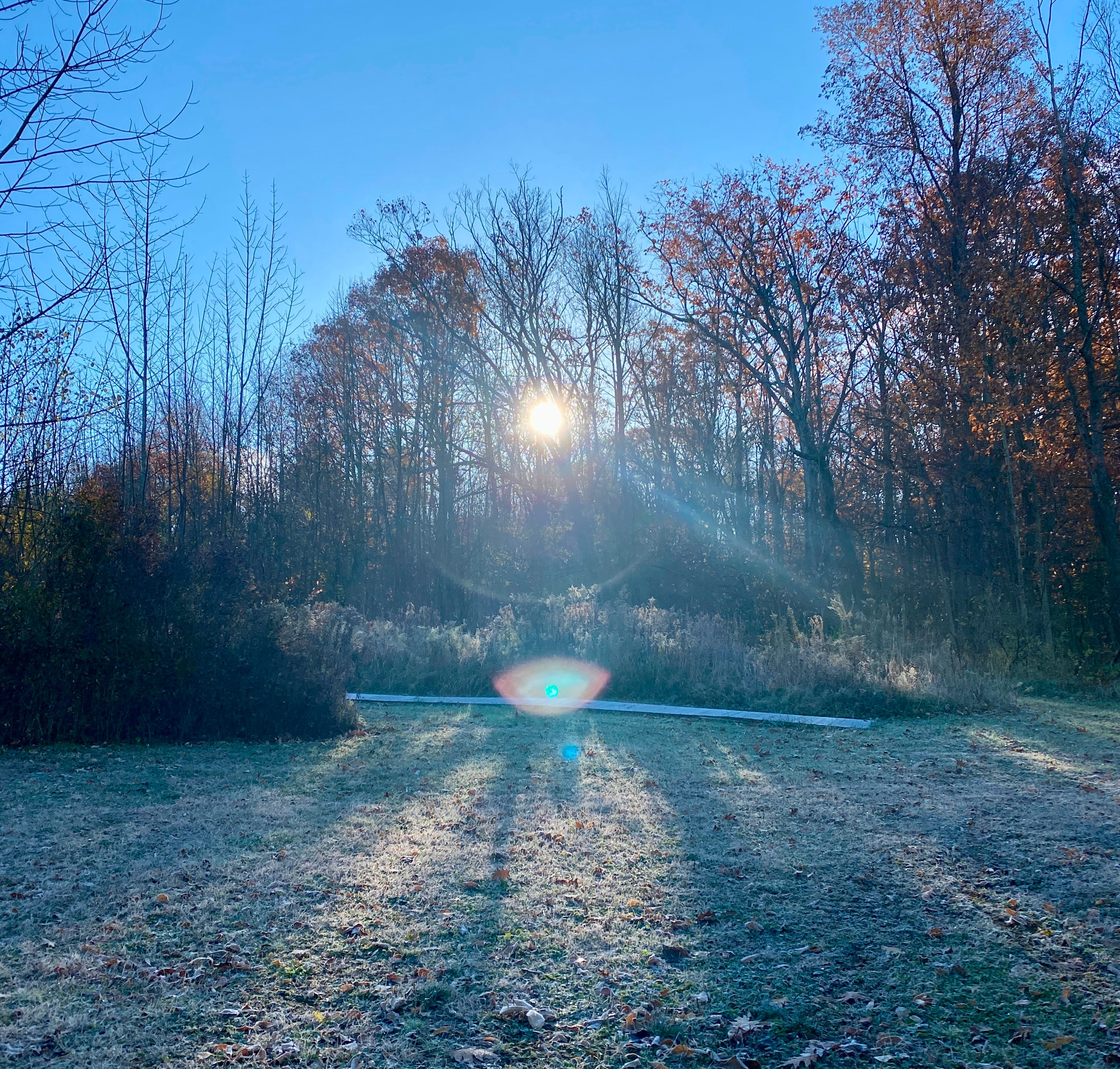
Yesterday, I watched the frosted tips of grass melt into a 60 degree afternoon. The annual transition from summer, to fall, to winter reminds me of the gentle progression of change and the beauty of letting the old go. The yellowing leaves begin their steady creep to compost and I try my best to ready my mind for a season of less. My bed beckons for me earlier in the evenings and holds my body tighter in the darkness of the starlit dawn. I am called to lay, to rest, to read under dim candlelight. I want badly to slow down and reflect as this season asks, but my “collegiate”, “over-achiever” mind and the shackles cast of societal demands to “go” predictably protest. As I navigate my brains objections that contrast my body’s persistent push to ease, my friends stay on call as we collectively try to calm the panic that arises from the incongruity.
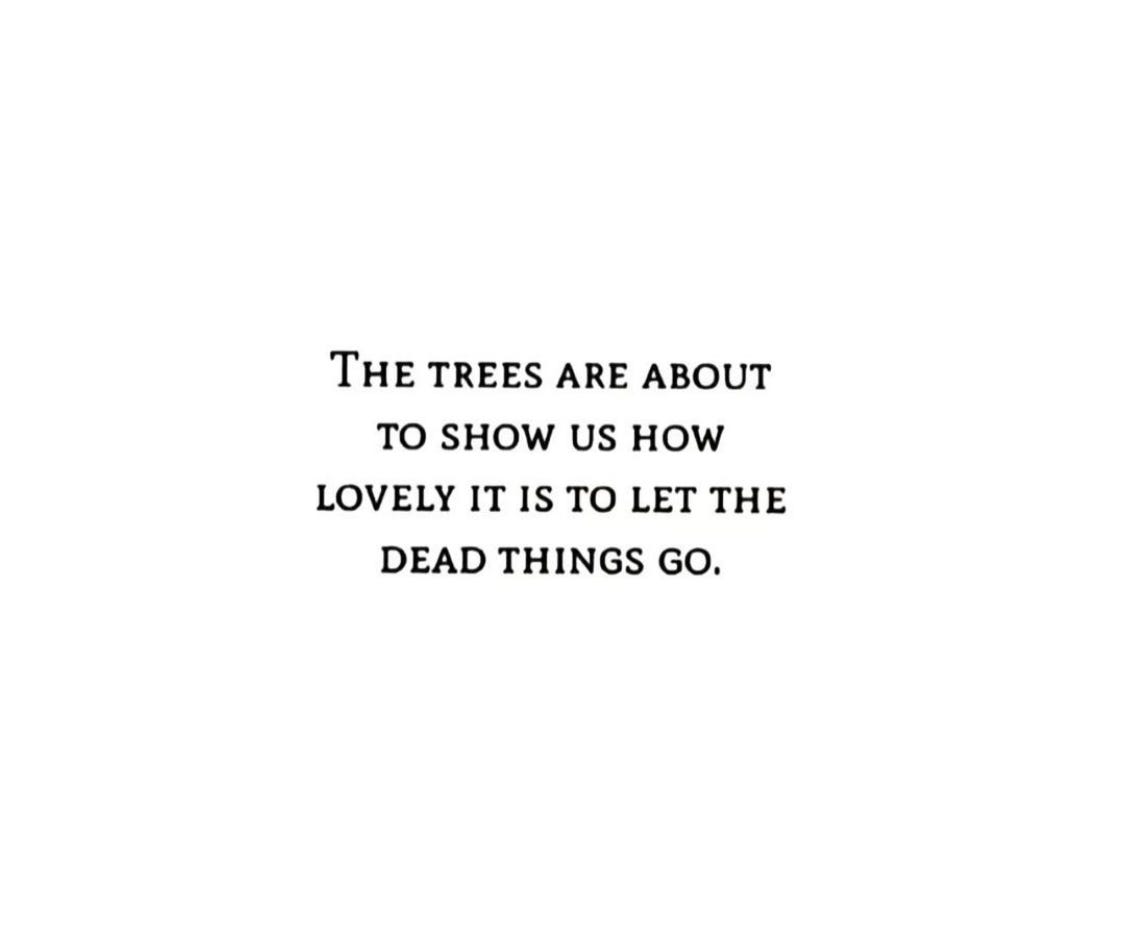
This isn’t a new feeling for me. Rather, it’s the same resistance I, and many of us, feel when the season calls for calm while capitalism screams for the opposite. As I reflect on my own disharmony, I find grounding in thinking about my elders, and their elders, and how they likely spent this time between falls’ stumble into winter. I arrive to thoughts of the harvest: collecting the fruits of our spring and summer labor and taking stalk of the years bounty: what all has been experienced, gained, and lost. I think about sifting through the abundance of what was picked, clipped, and uprooted and making choices about what to swallow up, absorb, or preserve, and what to let die.
There is beauty in letting go of the fruits that never quite ripened and the roots that failed to tap to soils of the earth. Let them die. Welcome their compost.
This is the season of preserving what will feed us for the next. It is now that we dust off our ancestral vessels, crocks, and jugs. It is now that we begin the work to enhancing our harvest to make the nourishment last. We ferment, pickle, dry, and smoke in the community kitchens of our lives. This is necessary work of both the foods of the earth and the lessons of the season. It’s time that we familiarize ourselves with our cellar stores and prepare to fill ourselves, body and mind, to ensure our strength for the birthing of next spring.
I think about what this means for us intellectually and creatively:
How do we lean into the preservation, fortification, and fermentation of the arts, theory, and praxis that move our souls and propagate collective liberation?
How do take stock of our harvest and nourish ourselves for the seasons to come?
How do we honor the darkness of the days and rest through our study?
Strife, grief, and dread currently comprises the air of our present climate. How do continue the work of fortifying ourselves and our communities, through it all?
I envision the craftsman that spends the colder days whittling or the seasoned traveler who recounts their tales around the community fire. I see the writer with their head submerged in a page and a reader discussing new dreams among peers. I find comfort in a fall and winter that is characterized with learning, discussing, resting, and refining rather than the isolation and melancholy that too often underscores the season.
How do we commit to honing our skills and studying our crafts all while finding comfort, love, and safety in one another through the icy darkness of the winter months?
I’ve been thinking about what this means for my own personal and community practices. For my clay, I have been slowing down and moving away from the speed of the wheel. I have come back to the glorious mundanity of my hands: I carve smooth, and build in ways that feel meditative. And this practice, more often than not, is performed in company. We chat, gab, and yap as we form, score, and sculpt.
When I thought about this time of year in relation to my herbal practice, I knew I wanted to make a shift. I took two seasons off of teaching Connecting to Our Roots: Intro to Herbalism Intensive, at least, in the form I had been teaching it for the year and a half prior. I spent the spring into summer building classes and sharing knowledge one on one with a dear friend of mine. We would sit for hours in her garden, next to the spearmint and under her apple tree. We would make medicines and speak about our body’s long held relationships with the land. From the late summer into the early fall, I took my teaching on the road, touching communities from the midwest, the eastcoast, and the southeast. Along the way, my students, friends, peers and I relished in the intersections of clay, herbs, and the fall of empires. From babies to elders, we shared our stories and healed our hearts.
But as this winter nears, I am called once again to Connecting to Our Roots. The past two winters that I spent in this container with community and the medicines became a medicine in and of itself. For two years, this cohort enlivened, held, and cared for all who were involved. We built out spaciousness to hold our curiosity, joy, grief, and imagining. It was in these classes that I found so much connection, calm, and care. It only feels right to return to it- but with a few changes.
Up until now, Connecting to Our Roots: Intro to Herbalism Intensive has been a stable and reliable offering, from cohort to cohort. Some changes were made based on the unique needs of the students, but our approach to the learning stayed more or less the same. In this season, I have decided to be more intentional. I want to let the energy of the season inform the spaces we are creating.
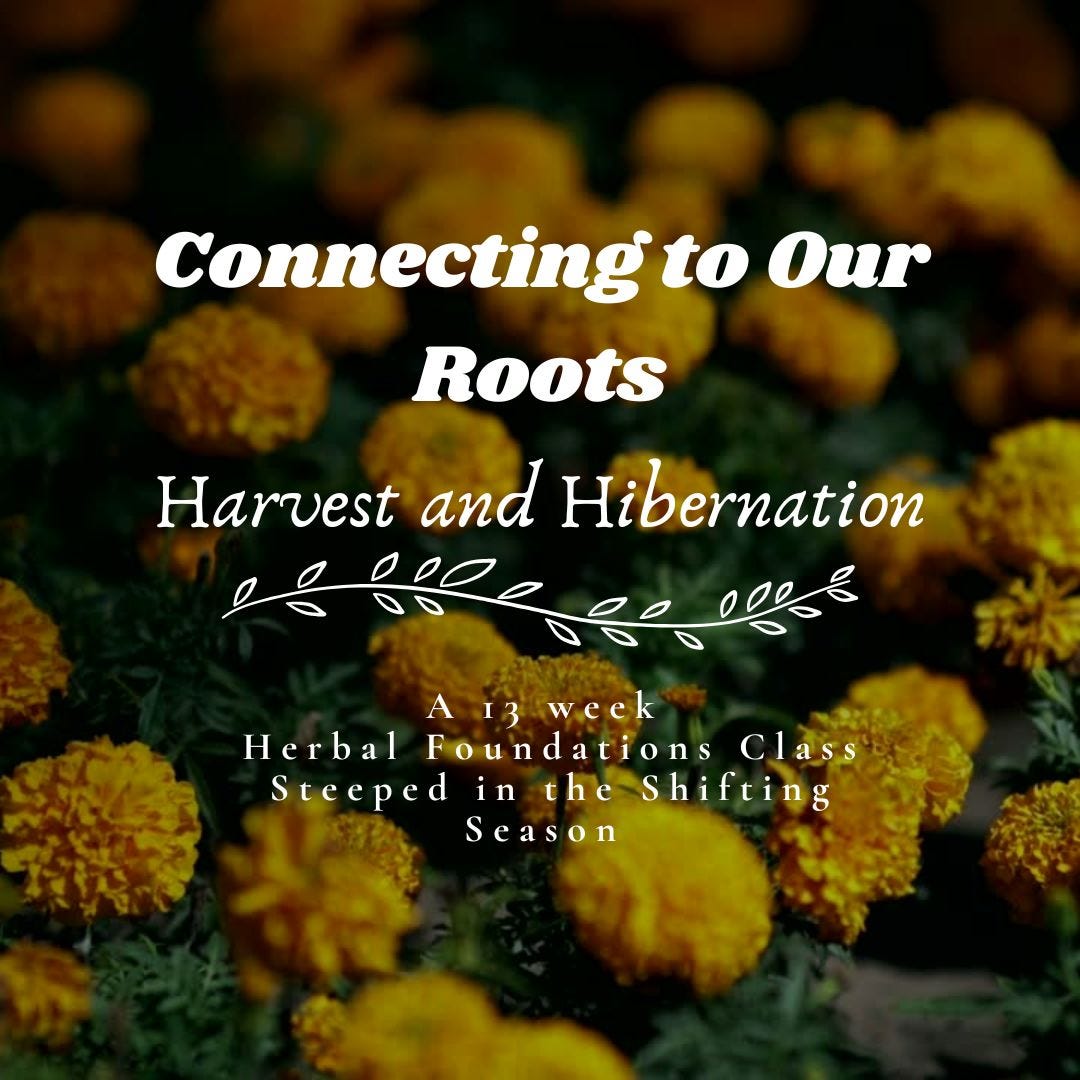
So, here it is again, Connecting to Our Roots, but with a shift. I am now calling in Connecting to Our Roots: Harvest and Hibernation. While the meat of this class remains, we will shift into an approach of digestion and reflection: taking our time to savor all the knowledge at hand and chew on their implications. Connecting to Our Roots: Harvest and Hibernation will also have a keen focus on autumnal and winter medicines: we will get to know them, learn to harvest them, and explore our options for preserving them for seasons to come.
These are not large changes, and are not intended to be. However, I believe these shifts will make for the same ancestral and liberatory learning space as before with more easeful integration into our daily lives.
If you feel called to a space, this fall and winter season, to learn ancestral medicine traditions, orient yourself in deep relationship to the land, and commit to a praxis of liberation, all while deeply rooting in the dark and quiet energy of the sleeping land, we would be honored to have you.
To apply, follow the link below:
https://www.raeflowerholistics.com/ctor-application-1
For more information about me, the class, or to download the syllabus, follow the link below:
https://www.raeflowerholistics.com/herbal-education
For questions, please feel free to reach out to me at raeflowerholistics@gmail.com
This reflection both held and grounded me. Deeply needed, thank you. Also YAYYYY to the return of CTOR! Right on time, as always 🕯️